A Climate Reference Manual for Australia’s Health Sector
Natural Capital and Climate (NCC), alongside Mosaic Insights and Alluvium Consulting, developed a national Climate and Health Reference Manual to support climate risk assessment and adaptation planning across 54 Australian health districts.
Climate risk assessment for Australia’s health sector
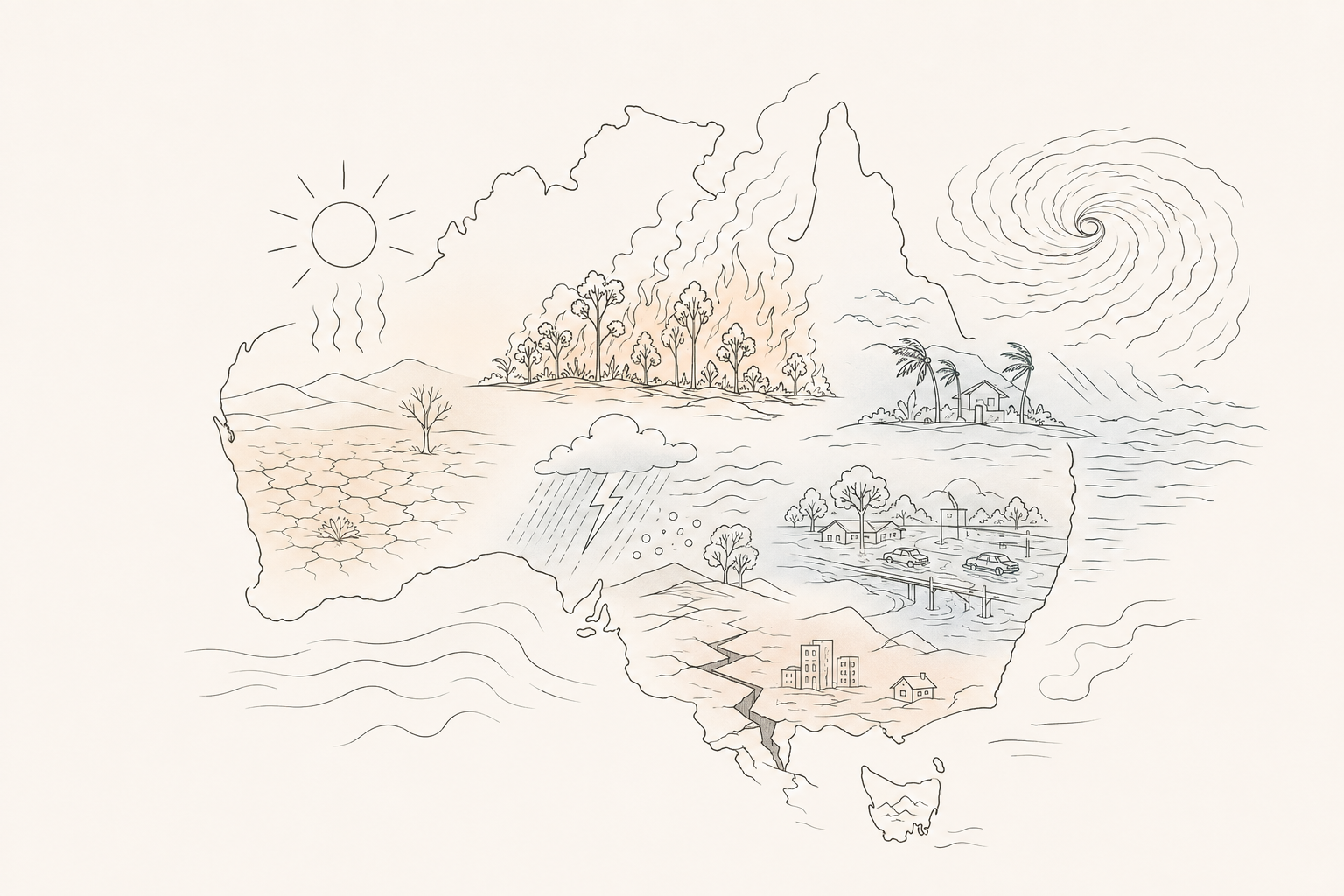
The project developed nationally consistent projections for six climate hazards: heat and humidity, bushfire, drought, storms, rainfall and flooding, and coastal inundation.
Drawing on CMIP6 climate modelling and jurisdictional datasets, the Manual presents 29 climate indicators across three time horizons and two climate scenarios. District-level reports translate these projections into practical information for assessing risks to population health, healthcare infrastructure and service delivery.
The Manual also provides guidance on interpreting climate indicators, understanding uncertainty and linking climate hazards with potential health outcomes. A complementary national web dashboard enables comparisons between health districts and visualisation of local climate hazards.
Key findings and outcomes
The analysis identified intensifying climate hazards across Australia, with substantial regional differences in exposure and potential impacts. Key risks include increased heat-related illness, respiratory and cardiovascular impacts from bushfire smoke, mental health impacts following extreme events, and disruption to healthcare infrastructure and services from flooding, storms and coastal inundation.
By combining nationally consistent climate projections, district-level reporting and practical guidance, the Manual provides a common evidence base for climate risk assessment, adaptation planning and emergency preparedness across Australia’s health sector.