All-hazard economic analysis for Queensland Reconstruction Authority
Natural Capital and Climate supported the Queensland Reconstruction Authority to develop the foundations for a consistent, all-hazard approach to economic assessment and investment prioritisation.
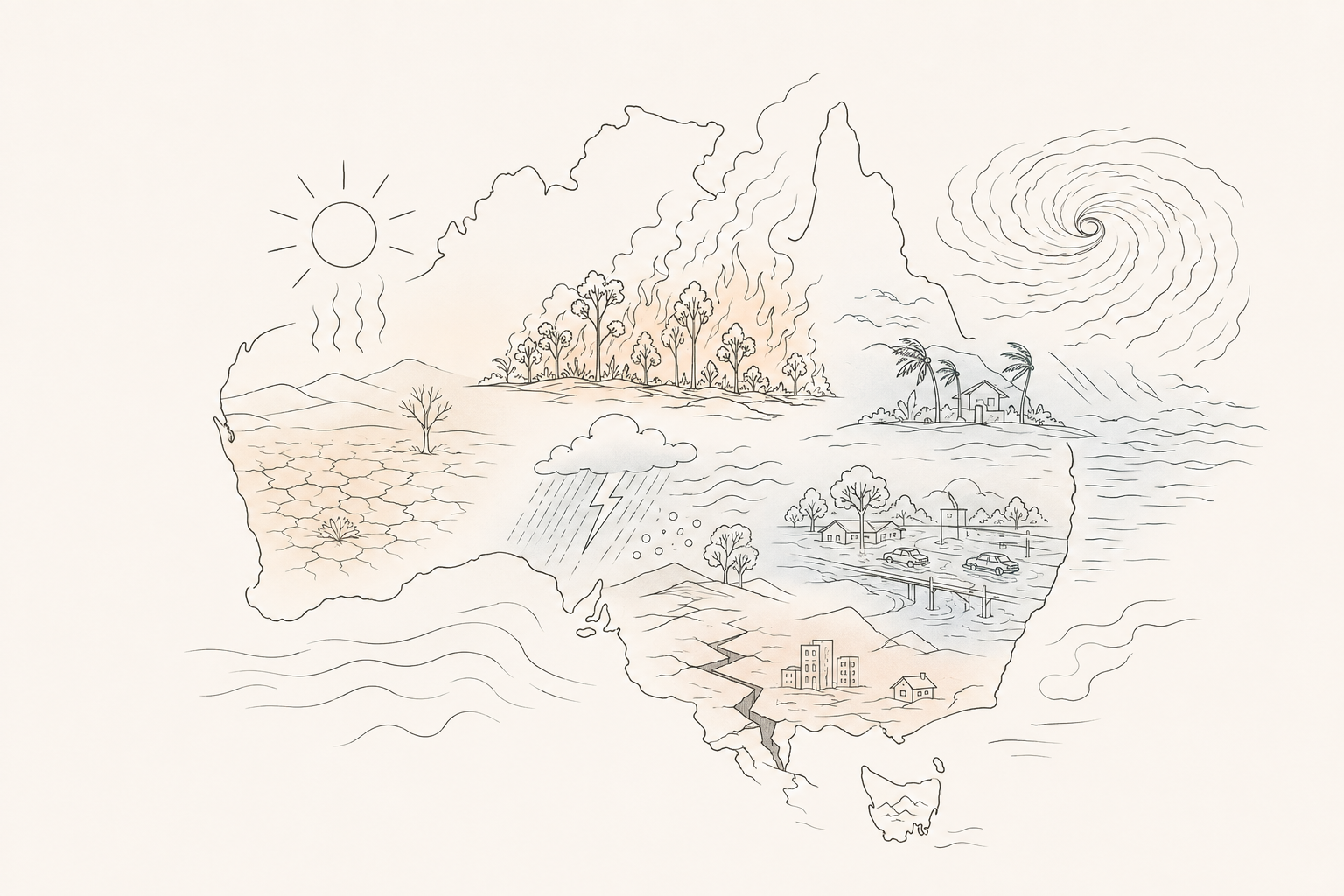
The Queensland Reconstruction Authority engaged Natural Capital and Climate to identify best-practice approaches to economic analysis for natural hazard risk mitigation. The work supported the development of a consistent methodology for assessing economic risks, costs and benefits across multiple natural hazards.
The Queensland Reconstruction Authority manages risks associated with inland flooding, storm tide inundation, cyclones, bushfires, hailstorms, extreme heat and conjunctive hazards such as cyclones and flooding. While these hazards can be considered using a common likelihood, consequence and risk framework, their economic impacts can differ substantially. Flooding, for example, is often characterised by direct damage to assets, while extreme heat can involve greater indirect losses such as reduced productivity and intangible impacts including health effects.
NCC undertook a comprehensive review of existing economic assessment methodologies to identify their strengths, weaknesses and gaps. The review also informed criteria for evaluating economic frameworks applicable to natural hazard risk mitigation measures.
The work resulted in two key deliverables:
- Existing State Report: documenting current practices and identified gaps;
- Business Case Proposal: setting out recommended methodologies, an implementation plan, costs and timeframes for subsequent phases.
Together, these deliverables provided the Queensland Reconstruction Authority with a foundation for developing an all-hazard economic assessment methodology and tool. The proposed design centered on a tiered cost-benefit analysis approach, with the ability to incorporate multi-criteria analysis and cost-effectiveness analysis where appropriate. This framework was designed to support more consistent prioritisation of investment in natural hazard risk mitigation.